


I want to approach this subject differently, as for over three decades I’ve read articles and blog posts discussing what your email inbox says “about you,” along with organizational and decluttering styles. Most of these posts are from the early 2000s to pre-COVID, and how everyone approaches their inbox has changed immensely.
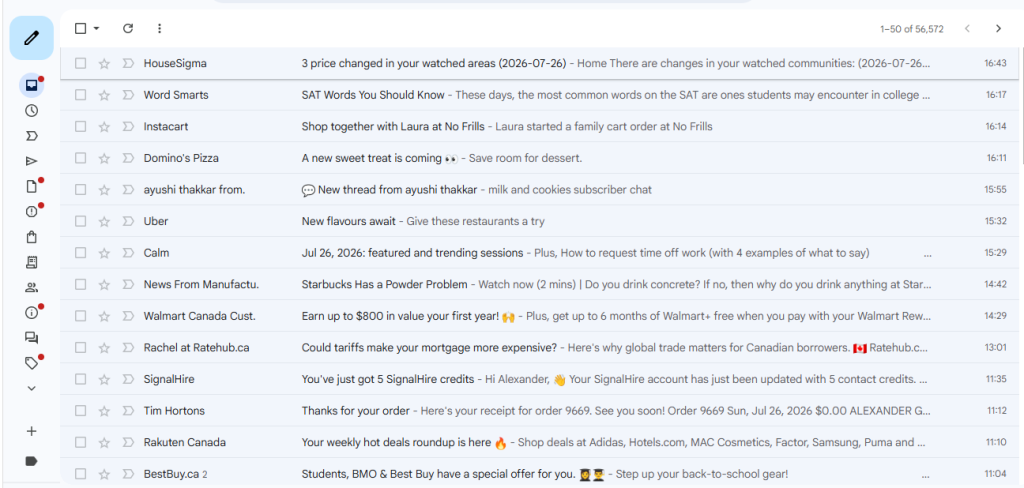
Using my personal Gmail inbox above as an example (an address I’ve held for over 20 years, beaten only by my Hotmail address) we see it holds an incredible amount of history, but zero unread emails. At least in the general sense. I’ve certainly skimmed mail and lost emails over the years. I tend to have backups of my email data stored on servers elsewhere and close at hand in case my email is ever compromised, and I also hold several company emails where I do the same.
This is, however, not a foolproof concept, as these backups are sometimes done manually and other times automated. I’ve lost chunks of email data over the years due to corrupted servers, or because storage devices holding my backups were damaged, stolen, or lost over time.
“We” can’t hold onto everything forever with you as the sole operator of that data, but that data may be around longer than we expect after it’s out of our hands.
Your average person today is not just using email, but also other devices and services to communicate. I hail from the BBS and IRC days as a moderator and owner; long after users would log off from their sessions, that data was just sitting there. I could read days and days of those logs to this day. Now, in business, we have Slack, Microsoft Teams, Discord, Element, and Google Chat, let’s also throw in WhatsApp as well. All these lovely companies are safely and securely keeping our logs.
Zoom changed the game for virtual meetings all over the world; it’s used in offices, classrooms, and courtrooms. We can communicate and show up anywhere remotely with ease.
Encryption is the magic word here, though, isn’t it? Your data is either encrypted or not stored against strict TOS policies that we all trust within reason. Our faithful AI assistants, trained on any and all data, provide feedback and fix issues and problems based on everything they’ve been provided, either from you or “the source” that being the delightful engineers. Some people even allow AI to moderate and write their emails for them now. We’ve become so accomadating.
You may notice I haven’t quite touched on messengers, text/SMS, and the like, all of which are guilty of hoarding messages that are universes in themselves with their immense data, each telling a story of its own.
Much of my personal inbox was read, skimmed, and organized. Yet, it tells very little about me. This was simply the view of my inbox an hour ago at the time of this post.
And like that, it’s gone.
Regards,
Alexander/Zenchi